The Magic of Sincerity
2026-03-30 · 7 min read
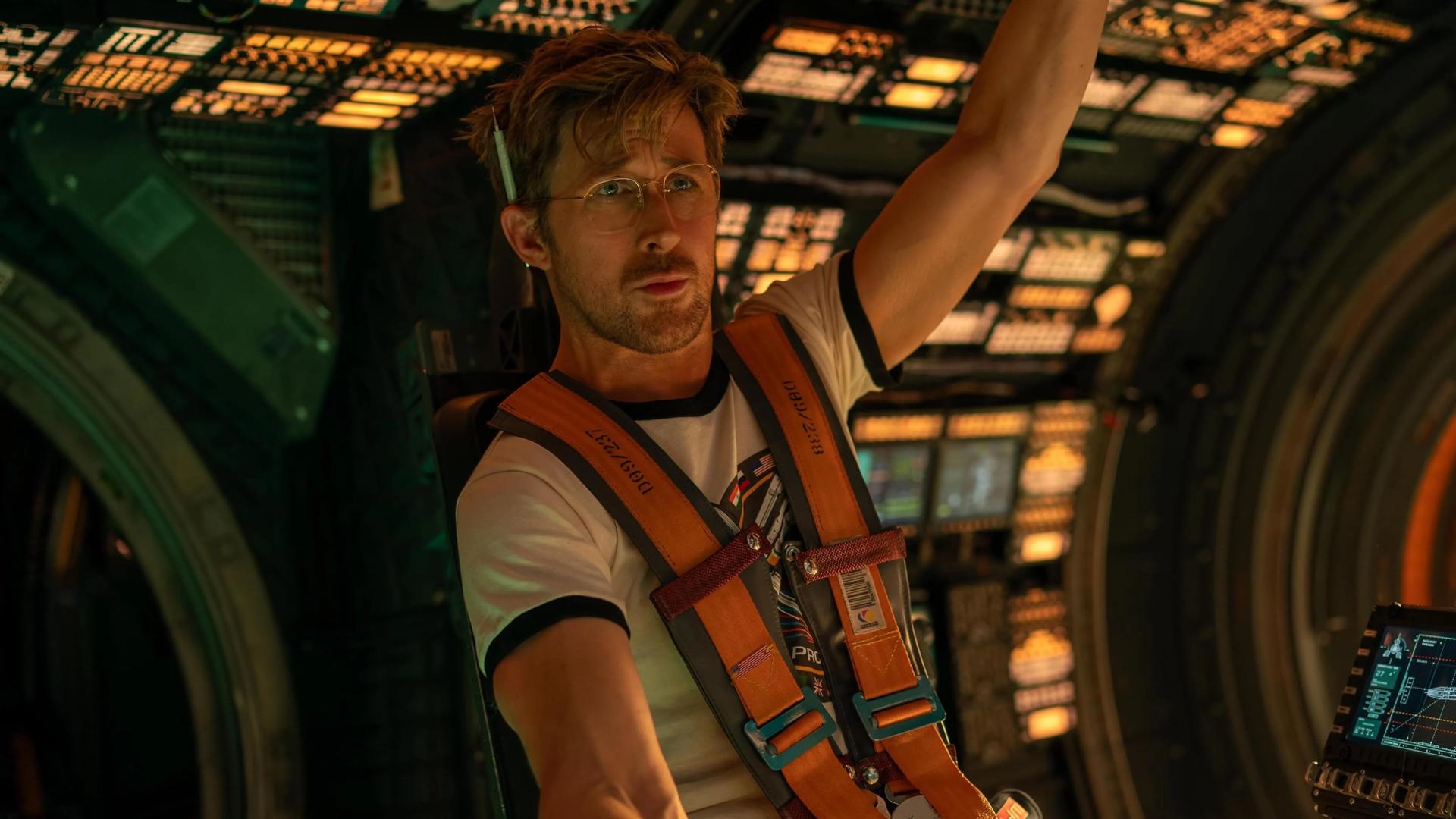
I saw Project Hail Mary this past weekend and it really impressed me. It wasn't the big budget production value or stunning visuals that captured my attention most but rather the sincerity of its hopefulness. I won't spoil any details of the film and you should absolutely go see it.
In the days since I have seen countless memes and posts like this one:

this is really how life feels after seeing project hail mary i know i can't shut up about it rn it just gave me a new spark

When asked about why he wanted to make the movie, Ryan Gosling said: "I was tired of the gloom and apocalyptic messaging, especially as a dad. What if the future isn't all good or all bad, just something to figure out."
Project Hail Mary netted $141 million in its opening weekend, one of if not the best ever for a non-franchise, non-sequel, non-reboot film. Based on the novel by Andy Weir, the story centers around a guy in a spaceship facing an apocalyptic situation and choosing continually to move forward.
Destructive irony
To understand why this matters you can go back a few decades to a David Foster Wallace essay called E Unibus Pluram that diagnosed a problem most people couldn't see yet because they were living inside it.
Wallace's argument was about television, but the insight extends well beyond it. He noticed that TV had learned to mock itself, preempting any criticism by wearing it as a costume. A show that winks at its own conventions can't be called out for those conventions. The result was a closed loop where irony stopped functioning as rebellion and became the default setting and the only safe cultural posture became detachment.
The deeper problem Wallace identified is that irony is unmatched as a tool for dismantling. It can expose hypocrisy, dismantle pretension, tear down institutions and norms. These are valuable things, and some of the most important cultural progress of the last century started with irony's ability to expose what needed exposing. But irony struggles to sustain or build anything durable in the place of what it tears down. Once irony finishes its work, you're left standing in a cleared field with no tools for building anything new.
Wallace predicted that the next important cultural figures would be "anti-rebels" who risked "the yawn, the rolled eyes, the cool smile, the nudged ribs." They would be willing to be called naive, sentimental, cringe. He wrote this thirty-three years before Project Hail Mary would premiere.
The problem he identified didn't go away when television declined. It migrated online and became cringe culture, which was irony's most efficient form. The entire apparatus of subreddits and YouTube compilations and tweet dunking exist to punish sincerity. Irony didn't argue against caring, it just made caring so socially expensive that people stopped.
The cleared field
When irony clears the field, something has to fill the void. Several things have tried. Online rage and outrage culture, critique as performance, and eventually a massive wave of nostalgia. Each one contains something real, genuine anger at genuine injustice, legitimate critique of broken systems, authentic longing for a time that felt more coherent. But in each case the dominant cultural expression of the impulse settled into performance rather than vulnerability.
Anger felt like it had substance because it at least cared about something. But online rage quickly became its own currency, where you signal how angry you are to prove you're on the right side. Critique became a creative act in itself, where tearing something apart was a substitute for making something. Both of these are irony's children, wearing different clothes. They protect you from vulnerability the same way detachment does, just louder.
Nostalgia is the most interesting failure because it looks the least like irony. The endless reboots, the 90s and 2000s revivals, the comfort rewatches, the entire aesthetics industry built around recreating a past that felt sincere because it appeared to exist before cynicism set in. When irony empties out the present, people retreat into a curated version of the past. Hollywood stopped risking new stories and kept reselling old ones. This may have felt like a return to sincerity, but it was still avoidance. Nostalgia lets you feel something real without risking anything new, warmth without vulnerability, and it is a refusal to do the harder work of building something original and risking it being bad.
Project Hail Mary breaking box office records as a completely original story is a direct rebuttal to the nostalgia economy. Some people may have shown up because they read Andy Weir's original book, but I would venture to guess that most people showed up because someone posted about it or told them directly that it was worth seeing.
Our current apocalypse
One of our current apocalypses seems to be the direction technology is moving, especially towards AI. It feels like a speeding bullet that no one is able to control or slow down or even know where it will hit. Much of the fear is warranted. People are watching their livelihoods get restructured in real time, and the people making the decisions are not the ones bearing the costs. The current discourse around AI has two dominant framings: utopian hype from the people selling it and apocalyptic dread from the people reacting to it, both a bit performant. The hype is ironic because the people pushing it know the caveats they're leaving out. The dread is ironic because it lets you feel sophisticated about the future without doing anything about it or stopping to think what a feat of progress it might be.
I have a lot of reservations about AI, specifically the theft of content from real artists and devaluation of some of the creative talents that make us deeply human. But the complete doomscroll posture toward AI is just the ironic stance applied to technology. It's the same detachment Wallace diagnosed, dressed up as concern. You get to feel like you see the problem clearly without ever having to engage with it constructively. The alternative is harder and less satisfying on social media: holding your concerns and your willingness to engage with the technology at the same time.
This is what Gosling's quote is really about: "What if the future isn't all good or all bad, just something to figure out." That sentence sounds simple but it's the hardest possible position to maintain because it forecloses on the comfort of certainty in either direction and requires you to stay present with something uncomfortable.
Writer and cultural commentator Paul Anleitner calls this the lie of the cynical genius:
"Tyler Durden (Fight Club) didn't just tell us we were slaves to the system. He looked good doing it. Rick Sanchez (Rick and Morty) may be a wreck of a human being, but he's also the smartest man in the universe. Dr. House (House) might be addicted, abrasive, and emotionally stunted, but he's always the one who solves the puzzle. In each case, the character's intelligence is used to justify their detachment. We come to see cynicism as a result of genius. They're not cold because they're broken; they're cold because they're right... Cynicism isn't the result of seeing the world as it really is. It's a defense mechanism born from a place of unhealed pain in our souls that drives us to approach the world with distrustful caution. It's the move from disappointment to detachment, from disillusionment to disdain. And in the short term, it feels like it works. Cynicism offers the illusion of control. You can't be hurt if you didn't expect anything good to begin with. You can't be betrayed if you never trusted... But what begins as a shield becomes an all-encompassing interpretive lens, and eventually ends as a prison."
There's a growing body of research linking chronic cynicism to measurable biological consequences. Studies have found that cynicism correlates with lower longterm cognitive ability, reduced earnings, higher rates of dementia, and increased cardiovascular mortality. The posture we adopted as sophistication is measurably making people worse off.
Looking ahead
There's real evidence that something is shifting. Project Hail Mary's box office. Everything Everywhere All at Once winning Best Picture on pure sincerity. The post-cringe movement on TikTok and in younger internet culture. These all seem to be part of a pattern. Whether it's a genuine cultural shift or just a consumer preference for hopeful entertainment on a Friday night is a fair question, and I don't think anyone can answer it yet.
The shift isn't complete and it might not survive. The risk remains that sincerity becomes its own aesthetic, another content category, another performance. Wallace said the anti-rebels would come and that they'd risk sentimentality, overcredulity, and the accusation of being naive.
Sincerity without action is just a nicer aesthetic. Feeling hopeful while the same structures remain in place isn't courage by itself. But the cleared field that irony left behind has been empty for a long time now, and people are getting tired of standing in it. Detachment was never really a life, just a very convincing way of avoiding one.
What would change if you dropped the shield tomorrow morning?